
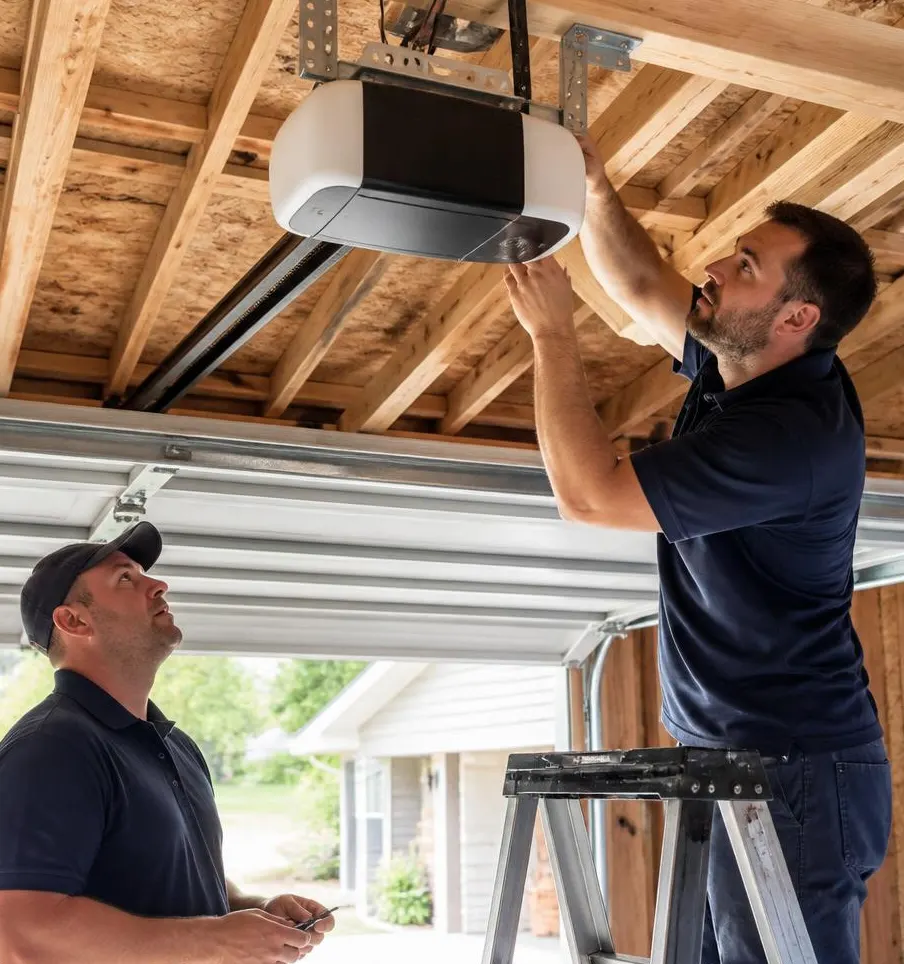
The Call That Starts With "Just Fix It" and Ends With "How Much for a New One?"
A technician gets to a house for a spring repair or a door that's grinding off its track, and halfway through the inspection the homeowner asks the real question: is this door even worth saving? It happens a lot in this part of Florida. Years of humidity have swollen the wood trim or warped a panel, salt-tinged air from storms has started pitting the hardware, and the door is pulling harder on its opener every month. At that point the conversation shifts from repair to replacement, and the first thing most homeowners want is a number. The honest answer is: it depends on what you're buying, so here's how the pricing actually breaks down.
What Actually Drives the Price
A garage door quote isn't just one number — it's a stack of choices, and each one moves the total.
Material and Construction
Steel is the baseline material: durable, low-maintenance, and resistant to the swelling that plagues solid wood in humid climates. Wood and wood-composite doors cost more and need more upkeep here, since moisture cycles through hot, wet summers and drier winters. Aluminum and glass doors sit in their own category, prized for a modern look but requiring careful attention to wind resistance.
Insulation
Single-layer steel doors are the cheapest option but offer little insulation and tend to flex more in wind. Two- or three-layer insulated doors with a polyurethane core cost more upfront but hold up better against temperature swings and add rigidity — a real plus when gusty storm fronts roll through.
Size and Panel Style
A single-car door is less expensive than a double-wide, and raised-panel or flush designs cost less than carriage-style doors with decorative overlays, faux hardware, and arched tops.
Wind-Load and Impact Rating
This is the factor homeowners most often underestimate. Doors rated for higher wind loads use heavier gauge steel, reinforced tracks, and stronger end hinges to resist pressure during hurricane-season storms. Wind-rated doors cost more than standard-duty ones, but in a region that regularly sees tropical storm activity, it's not an upgrade to skip.
Glass, Windows, and Decorative Hardware
Windows add natural light and curb appeal but also add cost, and each pane is another seal that has to hold up against wind-driven rain. Decorative strap hinges, handles, and clavos on carriage-style doors are mostly cosmetic but can add several hundred dollars.
Labor, Removal, and Extras
Installed pricing should include removing the old door, hauling it away, setting new tracks, and balancing the springs for the new door's weight. If the old opener isn't compatible with the new door's weight or wind rating, that's an added cost too.
Typical Installed Price Ranges (National)
These are general national ranges — not local quotes — meant to show how the categories stack up against each other:
- Basic non-insulated steel, single-layer: roughly $700–$1,200 installed.
- Insulated steel, two-layer: roughly $1,200–$2,000 installed.
- Insulated steel, three-layer, higher R-value: roughly $1,800–$2,800 installed.
- Faux-wood composite carriage style (steel construction): roughly $2,500–$4,500 installed.
- Aluminum or full-view glass doors: roughly $3,000–$6,000 installed.
- Real wood carriage doors: roughly $4,000–$8,000+ installed.
- Fully custom carriage doors with glass, iron hardware, and premium finishes: roughly $5,000–$10,000+ installed.
Double-wide doors generally run higher within each category than single-car doors, and wind-rated upgrades can add a few hundred dollars across the board.
Costs Homeowners Often Forget to Budget For
- Opener upgrade: a heavier insulated or wind-rated door may need a stronger opener, especially if the current one is older.
- Track and wall reinforcement: homes with older framing sometimes need extra bracing to meet wind-load requirements.
- Weatherstripping and seals: good bottom and side seals matter more here than in drier climates, since they keep wind-driven rain and humidity out during afternoon downpours.
- Finish touch-ups: steel doors with factory paint hold up well, but custom colors or faux wood grain finishes can add to the price.
Getting the Best Value for This Climate
For most homes here, a mid-grade insulated steel door with a wind-load rating suited to the area hits the sweet spot — it resists rust better than bare wood, keeps its shape despite humidity swings, and won't buckle under storm gusts. If curb appeal is the priority, a steel carriage-style door with a faux wood finish gives the look of real wood without the swelling and rot risk that solid wood faces in a hot, humid environment. Real wood carriage doors look great but need more sealing and maintenance to survive the moisture here long-term.
When to Call Evinston Garage Door Service
If a technician is already out for a spring repair or an off track door repair and the door itself is rusted through, warped, or no longer closing evenly, that's the moment to ask about replacement instead of another patch job. Evinston Garage Door Service can walk through Garage Door Installation & Replacement options on the spot, matching the door's wind rating and insulation level to the home, and handle Garage Door Opener Installation at the same time if the current opener won't keep up with a heavier door. One visit, one clear plan, no guesswork.
If your garage door in Evinston, FL is showing its age before storm season peaks, call Evinston Garage Door Service for a straightforward, no-pressure look at your options.