
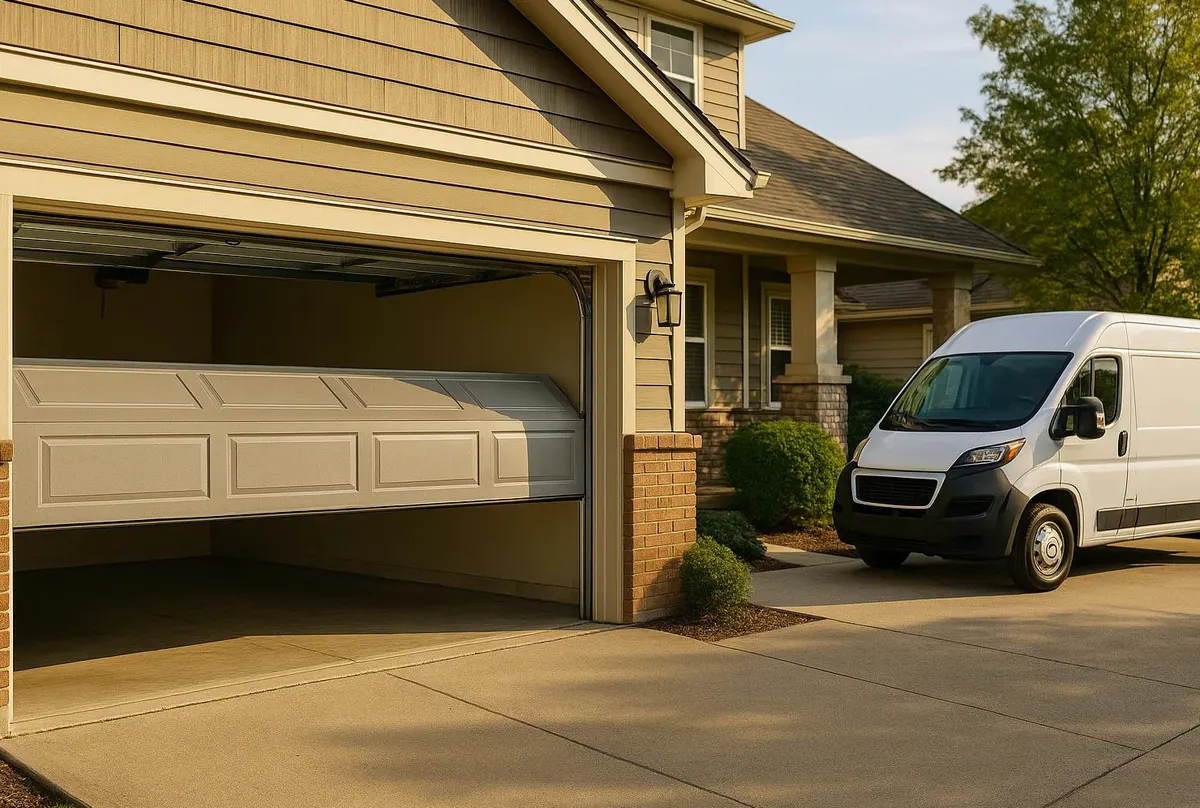
If your garage door problem involves a spring, the rule is simple: don't touch it yourself. The only real exceptions are visual inspection from a safe distance and basic track or roller maintenance that doesn't involve releasing tension — everything else belongs to a trained technician.
What Actually Goes Wrong When a Spring Lets Go
A standard torsion spring above a garage door is wound tight enough to lift 150-400 pounds of door, which means it's storing an enormous amount of mechanical energy at all times. When that energy releases suddenly — because a cable slips, a winding cone fails, or a homeowner loosens the wrong bolt — the spring doesn't just fall. It can whip, spin violently on the shaft, or send a winding bar flying across the garage with enough force to break bones. Extension springs, the kind mounted horizontally above the tracks, carry the same risk in a different form: if they aren't secured with a safety cable running through the coil, a snapped spring becomes a metal projectile.
Emergency rooms see a steady stream of these injuries every year: crushed fingers, broken wrists, facial lacerations, and concussions from spring-loaded hardware striking someone standing too close.
Why These Injuries Happen So Fast
Spring failures don't give much warning. A spring that looks fine one day can snap the next because metal fatigue, rust, or a hairline fracture has been building invisibly. In this part of Florida, humidity and salt-tinged air accelerate corrosion on uncoated or poorly maintained springs, which means a spring here can weaken faster than the same part would in a drier climate. Add in the extra tension used on wind-load-rated doors — common in areas that have to meet hurricane wind codes — and you've got springs under higher stress than a typical residential door elsewhere in the country.
The Specific Mistakes That Send People to the ER
- Using a screwdriver or vice grips instead of proper winding bars to wind or unwind a torsion spring — these tools can slip under load.
- Cutting or loosening a wound spring without a controlled release of tension, which is one of the most common causes of serious injury.
- Standing directly in front of the spring or shaft while working, instead of to the side, out of the direct line of force.
- Skipping the safety cable on extension springs, so a failure has nothing to contain the broken coil.
- Not disconnecting the opener and door from power before working near the spring system, risking accidental activation.
- Working alone on a repair that requires a second set of hands to hold tension or stabilize the door.
What You Can Safely Do Yourself
None of this means homeowners should ignore their garage door entirely. There's plenty you can handle without going near the spring system:
- Visually check springs for gaps in the coils, rust streaks, or a stretched appearance — then call for service instead of adjusting anything.
- Lubricate rollers, hinges, and the track with a garage-door-specific lubricant to reduce strain on the whole system.
- Tighten loose bolts on the track brackets, not the spring hardware.
- Listen for grinding, popping, or a louder-than-usual motor, which often signals a spring under extra strain.
- Clear leaves, grit, and standing water from the tracks after the afternoon storms that roll through during the wetter months — debris left behind can cause the door to bind and put uneven pressure on the springs over time.
When to Call Evinston Garage Door Service
If a spring looks stretched, rusted, or has already snapped, that's a job for Garage Door Spring Repair, not a weekend project. A technician will measure the correct wire gauge and length for your door, replace both springs as a matched pair even if only one failed, and properly set the tension using winding bars and safety equipment designed for the job. If it's been a while since anyone's looked at your door's hardware, a Garage Door Maintenance & Tune-Up visit catches early rust, wear, and tension issues before they turn into a sudden failure — especially useful given how quickly humidity and salt air can work on exposed metal here.
If your garage door spring looks worn, sounds off, or has already broken, call Evinston Garage Door Service. We handle spring repair and maintenance throughout Evinston, Micanopy, McIntosh, Citra, and the surrounding Alachua and Marion County communities — safely, and the right way the first time.